
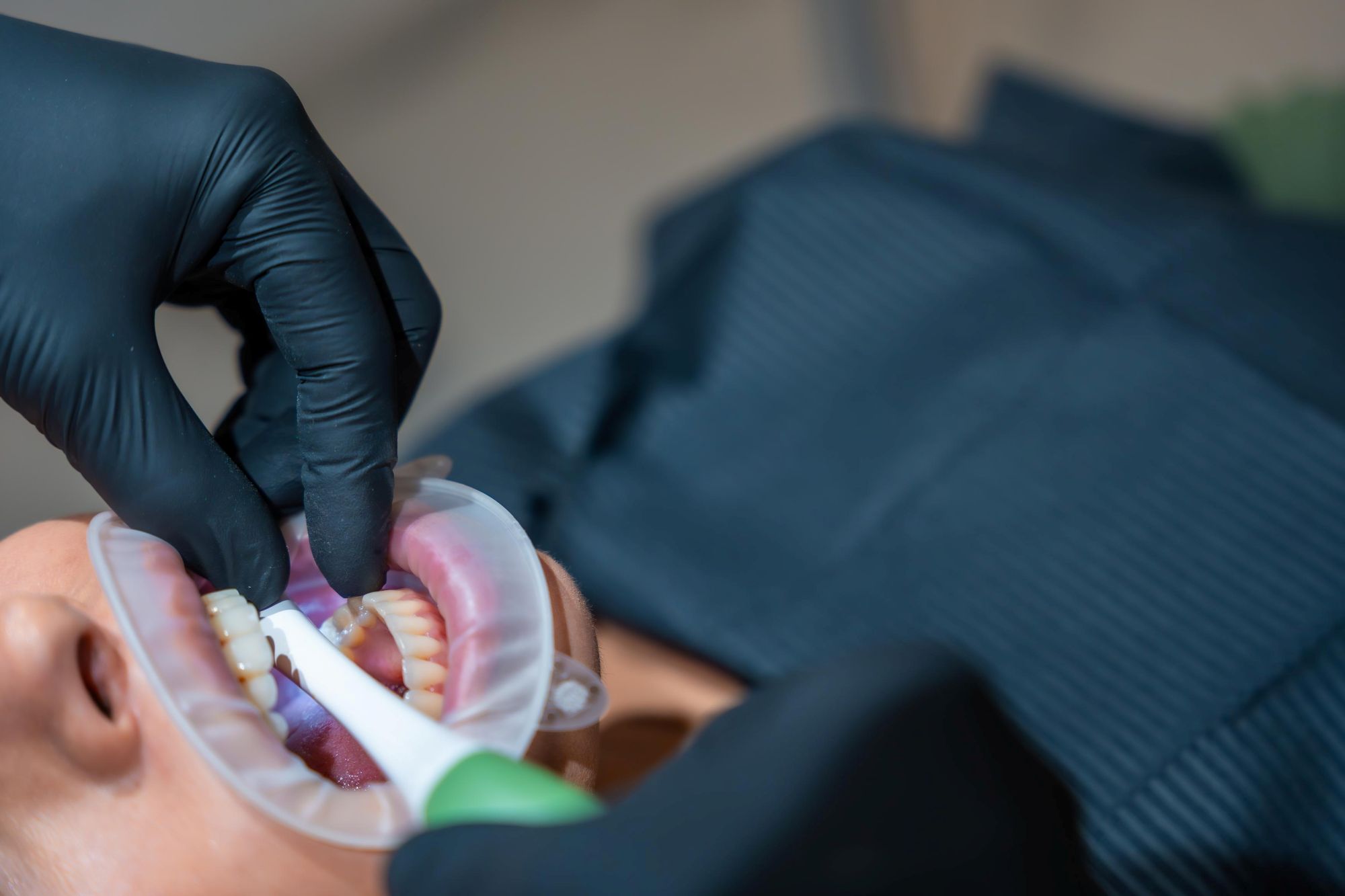
A deep cleaning is different from a routine cleaning. Scaling and root planing is non-surgical periodontal treatment performed below the gumline to clean root surfaces and manage periodontal pockets.
Treatment uses hand and ultrasonic instruments with local anesthesia as part of the in-house protocol. Soft-tissue laser debridement may be added in deeper pockets, and localized Arestin may be placed when indicated.
Scaling and root planing is the non-surgical step used to treat disease below the gumline. If the periodontal findings are more advanced, the next step may be therapeutic gum surgery or referral, depending on the scope of the case.
Deep Cleaning vs. Regular Cleaning: What's the Difference?
A routine cleaning and scaling and root planing are different services. Scaling and root planing is the deeper, non-surgical periodontal treatment used when pocket management and subgingival root cleaning are needed.
Periodontal probing and the clinical evaluation help determine whether routine preventive cleaning or scaling and root planing fits the findings.
Request an AppointmentWhat Actually Happens During a Deep Cleaning?
Local anesthesia is used for the in-house deep-cleaning protocol. Hand and ultrasonic scalers are used for subgingival cleaning and root-surface smoothing.
Laser Adjuncts and Arestin: When They May Support Deep Cleaning
Those adjuncts are not automatic. Deeper pockets may be treated with soft-tissue laser debridement, while localized Arestin can be considered for specific sites when indicated.
These are adjuncts to the hand and ultrasonic scaling used in the periodontal treatment.
When Deep Cleaning Is Not Enough
If the periodontal condition requires surgery, selected cases can be managed in-house. Severe stage-IV defects requiring extensive osseous surgery are referred to a periodontist.
Deep Cleaning Questions Patients Commonly Ask
Treat Periodontal Disease at the Level It Requires
When scaling and root planing is recommended, the reason should be visible in the periodontal findings. We will also explain whether laser debridement or localized Arestin adds anything useful to the plan.