
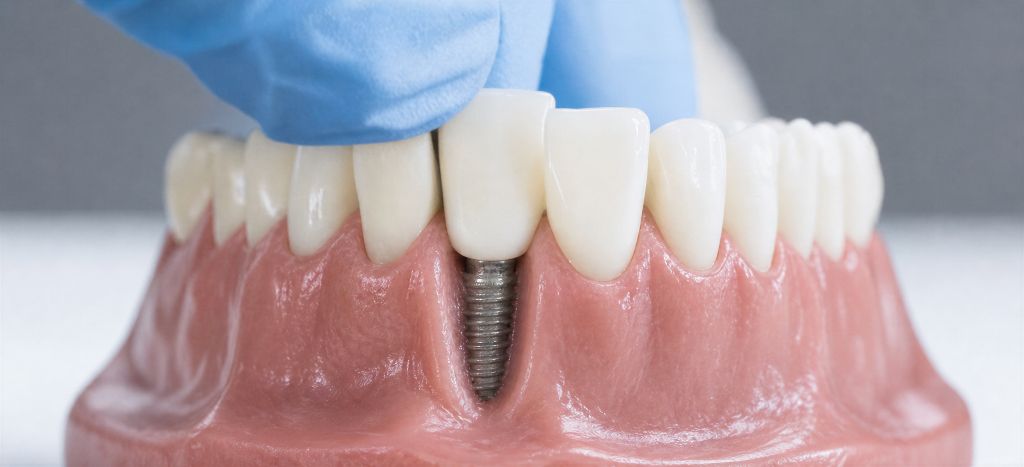
A dental implant is placed in bone, but the plan is judged by the tooth you eventually see and use. We begin with the final crown or bridge in mind before deciding where the implant should go.
Dental implants are titanium fixtures used to support a fixed crown or bridge for one or several missing teeth. At Smiles by Mario Montoya, 3D CBCT imaging and digital records help us evaluate bone, anatomy, and restorative space before surgery. When a site needs additional support, treatment may also include bone grafting, sinus augmentation, or platelet-rich fibrin (PRF).
Dr. César Cáceres, DMD, leads implant and surgical care, with prosthodontic coordination from Dr. Carolina Herrera, DMD, when a case is part of a larger restorative plan. We use titanium systems including Zimmer, Neodent, Hiossen, and Straumann. Ceramic or zirconia implant bodies and removable locator-style overdentures are not offered.
What a Dental Implant Replaces, and What It Does Not
The implant is the foundation placed in the jawbone. The visible replacement is a crown or fixed bridge attached to that foundation. Thinking about those as separate parts helps explain why implant surgery and restorative design need to be planned together.
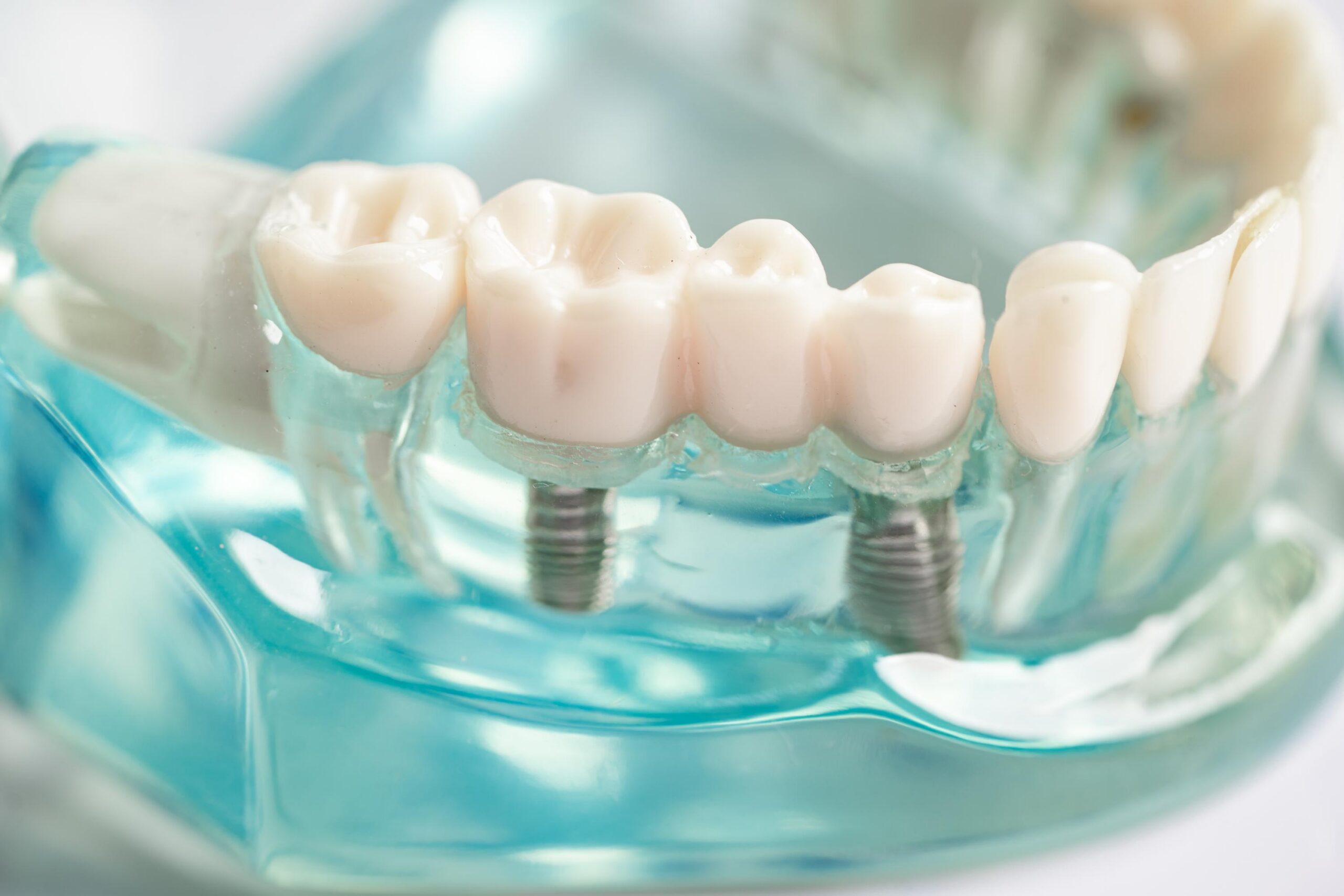
A single missing tooth may be restored with one implant and one crown. Several adjacent missing teeth may be restored with a fixed implant-supported bridge when the design allows it, so replacing several teeth does not always mean placing one implant for every tooth.
Start With the Final Crown or Bridge, Then Work Backward
Implant position affects where the final tooth emerges, how it meets the opposing teeth, and how a crown or bridge fits within the available space. Restorative-first planning defines those requirements before the surgical position is finalized.
Digital scans, photographs, clinical examination, and 3D CBCT imaging can be combined to connect the intended restoration with the anatomy of the implant site. When a surgical guide adds value, those records can also support guided implant placement.
Bone Grafting and Sinus Augmentation When the Site Needs More Support
Bone loss does not automatically rule out implant treatment. Some sites can be rebuilt before or during implant placement with bone grafting or bone regeneration. The practice also performs sinus-lift procedures when they are clinically indicated.
The grafting plan may use the patient's own bone combined with biomaterials. Which approach, if any, is appropriate depends on the anatomy and the restorative plan for that site.
PRF Is an Adjunct Made From Your Own Blood
Platelet-rich fibrin, or PRF, is prepared from a small sample of the patient's own blood and may be placed at an implant, graft, or extraction site as part of the surgical protocol.
PRF is not a separate implant system or a substitute for sound surgical planning. It is one adjunct that may be incorporated when the clinical plan calls for it.

A Dental Implant Timeline Has a Surgical Phase and a Restorative Phase
Implant treatment usually happens in stages. The exact timeline depends on bone, grafting needs, implant stability, healing, and when the site is ready for the final restoration. A typical sequence includes:
There is no useful one-size-fits-all implant timeline. We map the surgical and restorative stages for your specific site before treatment begins.
Titanium Implant Systems Used in Our Sandy Springs Practice
Smiles by Mario Montoya places titanium implant systems including Zimmer, Neodent, Hiossen, and Straumann. We can also evaluate implants that were placed by another dentist to determine whether the existing system can be restored within our clinical workflow.
Replacing Several Missing Teeth With a Fixed Implant Bridge
When several teeth are missing together, implants can sometimes serve as anchors for a fixed screw-retained bridge rather than placing a separate implant for every missing tooth. FP1 and FP3 structural designs are available when they fit the restorative requirements of the case.
Removable snap-in locator overdentures are not part of the practice scope. Full-arch implant treatment here is planned as a fixed solution.
Questions Worth Answering Before Implant Surgery
Do Not Plan the Surgery Until the Replacement Tooth Makes Sense
If you have been told you need an implant, the next question is whether one can be placed. It is whether the site is ready, what the final crown or bridge needs to accomplish, and whether implant treatment is the right way to rebuild the space.