If you are researching All-on-4 dental implants in Atlanta, you may wonder whether to keep repairing individual teeth, replace a removable denture, or consider a fixed full-arch restoration. When several teeth are missing or difficult to maintain, choosing what to do next can feel overwhelming.
Full-arch dental implants may be an option when an entire upper or lower arch needs replacement. Candidacy depends on the condition of your teeth, available bone, medical history, and ability to maintain the restoration. Several damaged teeth alone do not establish that you need this treatment.
At Smiles by Mario Montoya in Atlanta, the Sandy Springs team offers individualized rehabilitation planning. Understanding what an evaluation considers can help you approach that conversation with clearer questions and realistic expectations.
How Does All-on-4 Relate to Full-Arch Treatment?
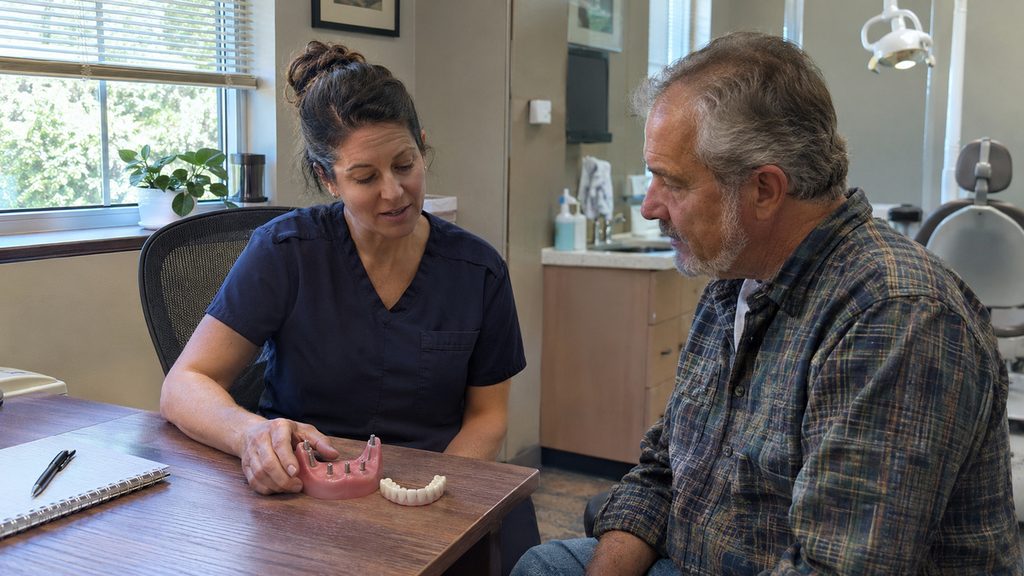
A fixed full-arch restoration replaces all teeth in one arch with a connected prosthesis supported by dental implants. The implants provide the foundation in the jawbone, while the prosthesis forms the visible replacement teeth. Treatment may involve the upper arch, lower arch, or both.
The Atlanta clinic describes this service as All-on-X full-arch treatment. The implant number and arrangement are planned for the individual case. All-on-4® is a specific full-arch approach using four implants; the terms should not be treated as interchangeable descriptions of every treatment plan.
The Atlanta practice’s full-arch restorations are fixed and screw-retained. You do not remove them for routine daily cleaning as you would a removable denture, but they still require careful home care and professional maintenance.
Who Might Be Considered for Treatment?
An evaluation may be useful if you are missing all teeth in an arch, have widespread dental breakdown, or struggle with a conventional denture. These situations raise the question of full-arch treatment; they do not answer it.
Someone with multiple failing teeth needs an assessment of each tooth and the arch as a whole. If suitable teeth remain, a combination of tooth-preserving treatment and replacement of individual missing teeth may be more appropriate.
Likewise, an uncomfortable denture does not automatically mean implants are the best next step. The dentist should assess the cause of the difficulty and compare reasonable options. Your priorities, including stability, cleaning requirements, appearance, and willingness to undergo surgery, belong in that discussion.
Can You Keep Any Remaining Natural Teeth?
The first decision is whether the teeth can be preserved. Your dentist considers their supporting bone, decay, fractures, existing restorations, and prospects for continued function. In suitable cases, restorative care or root canal therapy may help retain a tooth.
A conventional fixed full-arch implant restoration replaces the entire treated arch. If natural teeth remain in that arch, proceeding with this treatment generally requires their removal. Preserving suitable teeth may therefore lead to a different plan, such as individual restorations or replacement of selected missing teeth.
Treatment of one arch does not automatically require extraction of teeth in the opposite arch. Ask your dentist to explain which teeth can reasonably be kept, which cannot, and why the recommended approach fits your situation.
What Factors Shape Candidacy?
Bone and Anatomy
Implants require an appropriate foundation. Planning considers the amount, location, and quality of available bone, along with nearby nerves, sinuses, and the space needed for the restoration.
Bone loss does not automatically rule out implant treatment. It may affect implant positioning, require additional procedures, or favor another approach. A scan helps inform the assessment, but it does not by itself guarantee eligibility or eliminate surgical risks.
Gum Health and Existing Infection
Active periodontal disease and dental infections need attention during treatment planning. The dentist evaluates the tissues around remaining teeth and identifies conditions that could affect the proposed rehabilitation.
Removing failing teeth does not remove the need for ongoing oral hygiene. Gum inflammation and disease around implants can still develop, making prevention and follow-up important parts of care.
Medical History and Medications
Share your health conditions, medication list, supplements, and relevant treatment history. Some conditions and medications affect surgical planning, healing, or the precautions needed before care.
A diagnosis does not necessarily exclude you from treatment. Your dentist may need more information or input from your medical provider before recommending a plan. Do not stop prescribed medication on your own to prepare for an implant consultation or procedure.
Smoking and Tobacco Use
Smoking can interfere with healing and increase the risk of implant complications. Be open about tobacco use so the team can discuss its implications and any changes recommended before treatment.
This conversation should help you understand risk and prepare for care. It should not be replaced by a promise that a particular change will ensure a successful outcome.
Cleaning and Follow-Up
A fixed arch requires daily cleaning around and beneath the prosthesis, using tools and techniques recommended for its design. Ask for a demonstration so you understand what home care will involve.
Your ability to perform that care and return for maintenance matters when choosing a restoration. If dexterity or other limitations make cleaning difficult, discuss them before treatment so the plan accounts for your needs.
What Happens During an Evaluation?
Expect a discussion of your concerns, treatment goals, medical history, and previous dental care. The examination assesses remaining teeth, gum tissues, bite, existing restorations, and missing support. Bring available dental records and describe any difficulty chewing, cleaning, or wearing dentures.
Digital records and appropriate imaging, including CBCT when indicated, help assess bone and anatomy. Planning also considers the proposed teeth: their position, bite, space requirements, appearance, and access for cleaning. Surgical and restorative decisions need to work together.
Your experience with previous restorations also matters. Explain what has worked well, what has broken or felt uncomfortable, and what you hope to change. If you already wear a denture, bring it to the visit so the team can consider its fit and your concerns. A clear account of your daily difficulties helps connect the clinical findings to practical treatment goals, rather than choosing a procedure based on its name alone.
You should leave with an explanation of the findings, reasonable alternatives, major risks, and likely treatment stages. An evaluation is a chance to understand the recommendation before deciding whether to proceed.
If You Qualify, What Happens Next?
The plan may include preparatory care, extractions where indicated, implant placement, healing, and completion of the final restoration. The sequence depends on your clinical needs.
Some patients can receive a fixed temporary prosthesis during the surgical phase when implant stability and other clinical conditions permit immediate loading. That possibility should be discussed alongside the plan if immediate loading is unsuitable.
Temporary teeth are distinct from the definitive restoration completed after healing. Ask when each stage is expected, what eating restrictions apply, and how appointments may change according to your progress. Neither same-day teeth nor a particular healing timeline should be assumed before evaluation.
Questions to Bring to Your Consultation
A useful consultation connects the recommendation to your findings. Consider asking:
- Which teeth can reasonably be preserved, and what alternatives would allow that?
- How do my bone, bite, and health affect the proposed treatment?
- What are the major surgical and restorative risks in my case?
- What determines whether I can receive fixed temporary teeth during surgery?
- What will daily cleaning, follow-up, and possible future repairs involve?
If the treatment involves several phases, request an explanation of how they fit together. Understanding the responsibilities during healing and maintenance is part of deciding whether this option suits your life.
Frequently Asked Questions
Is There an Upper Age Limit for Full-Arch Implants?
Age alone does not determine candidacy. For older adults, the assessment focuses on oral and general health, anatomy, surgical considerations, and the ability to maintain the restoration. In younger patients, jaw growth and the appropriateness of replacing natural teeth also require consideration.
Can a Fixed Full Arch Feel Exactly Like Natural Teeth?
It is a prosthetic replacement and may feel different from natural teeth. Speech, chewing, cleaning, and the sensation of the restoration can require adjustment. Discuss your expectations and the limitations of the proposed design before treatment.
What if Full-Arch Treatment Is Not Right for Me?
Other approaches may include preserving and restoring teeth, individual implants, fixed bridges, or conventional dentures. The options depend on your findings. For selected missing teeth, the Atlanta team also provides single and multiple dental implant treatment.
Explore Your Options With the Atlanta Team
You do not need to decide on a full-arch restoration before your first visit. Start by understanding what can be preserved, what needs replacement, and which options fit your health and goals.
If you are considering full-arch dental implants in Atlanta, request an evaluation with our Atlanta team in Sandy Springs to discuss your needs and the next appropriate step.


