A damaged tooth does not automatically need the largest restoration available. The right choice depends on how much healthy structure remains, whether a tooth is missing, where it sits in the bite, and what material the case requires.
At our Sandy Springs office, fixed restorative options include e.max and zirconia crowns, traditional, cantilever, and Maryland bridges, and e.max inlays or onlays. Inlays and onlays offer partial coverage when a full crown is not required, while bridges can replace selected missing-tooth spaces.
Because the practice has an on-site lab, a single e.max crown may be completed the same day when the case allows, while a single zirconia crown generally requires about two days.

How Do I Know if I Need a Dental Crown?
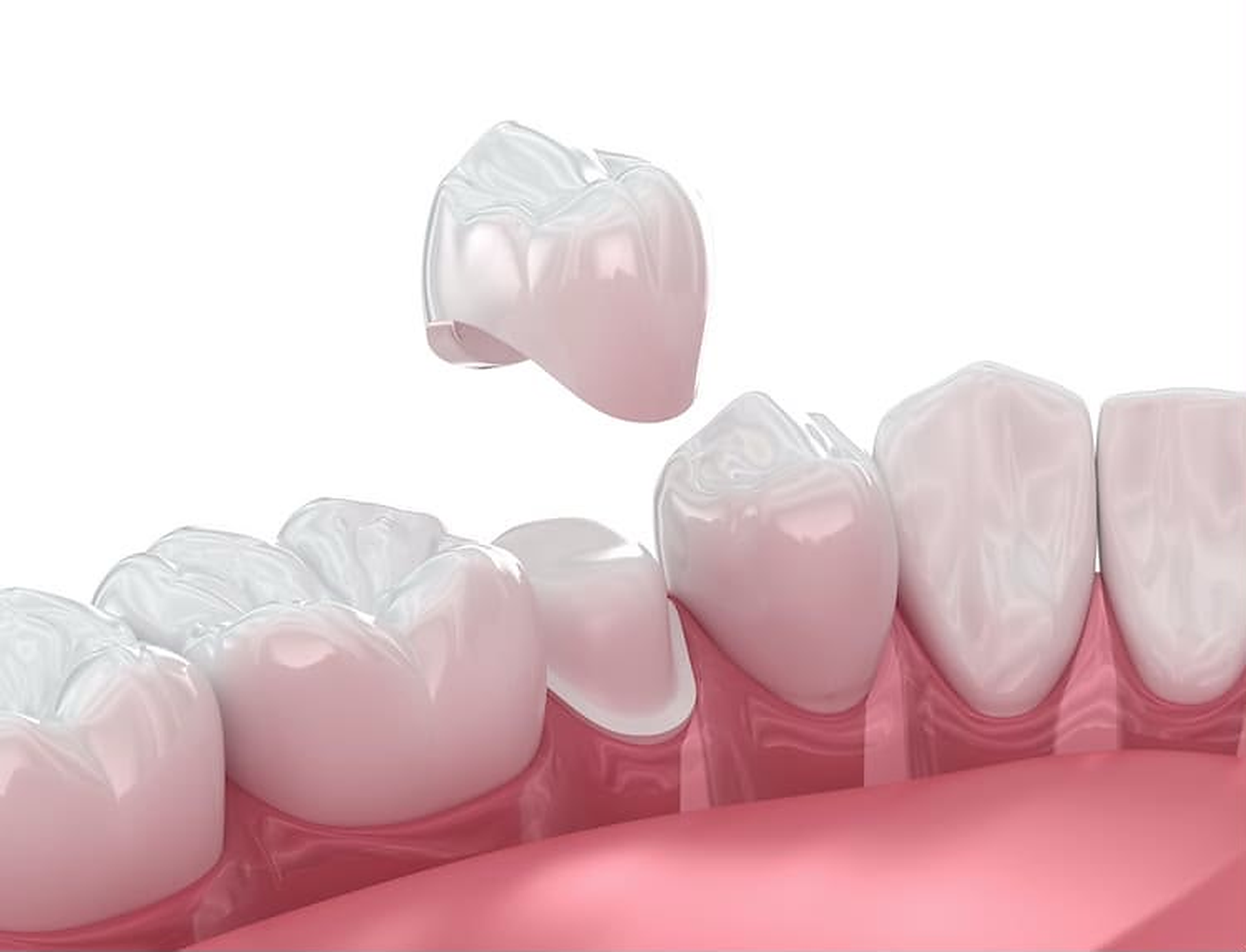
A crown covers the visible portion of a tooth when a filling or partial-coverage restoration would not provide enough protection.
Crowns can be fabricated in IPS e.max lithium disilicate or zirconia according to the clinical and material needs of the case.
Bridge or Implant: What Changes the Decision?
A dental bridge uses neighboring teeth or implants to support one or more replacement teeth. Whether a traditional, cantilever, or Maryland-style design is worth considering comes down to the location, available support, and restorative needs. The practice provides traditional, cantilever, and Maryland bridge configurations, as well as implant-supported fixed options when those treatments fit the broader restorative plan.
When an Inlay or Onlay May Preserve More Tooth Than a Crown
Inlays and onlays are partial-coverage ceramic restorations used when a tooth needs more reinforcement than a direct filling can provide but does not necessarily require a full crown.
Inlays and onlays occupy the middle ground between a direct composite filling and a full crown, providing partial ceramic coverage when that is enough to restore the tooth.
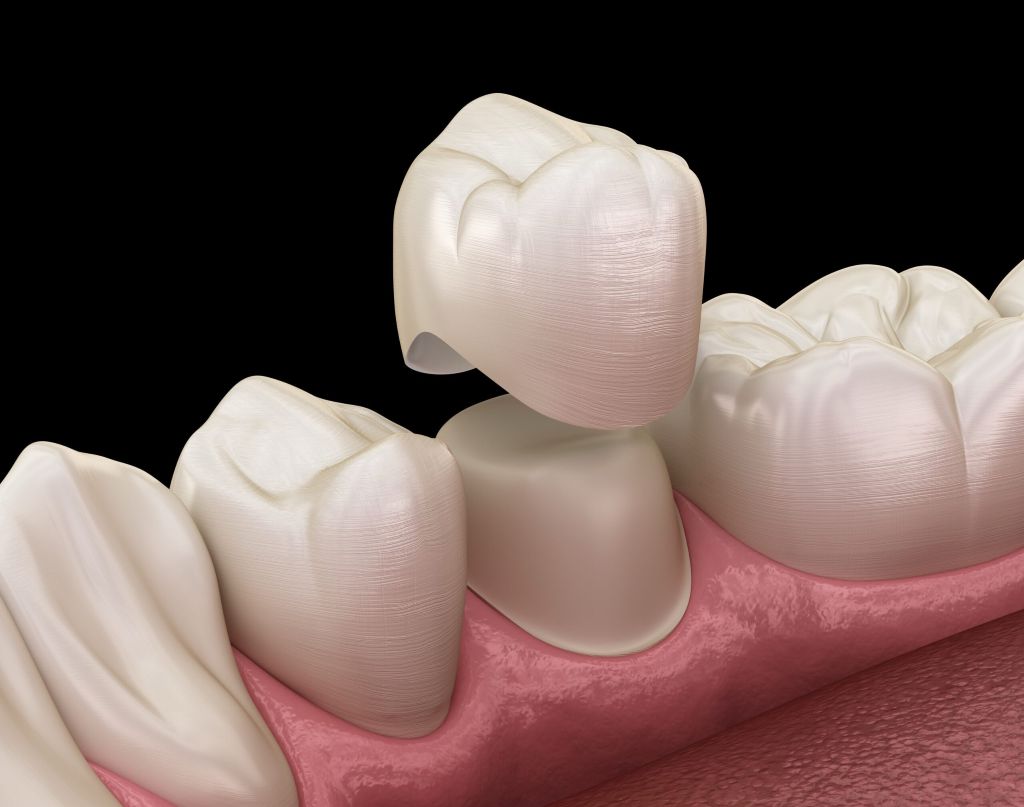
From Damaged Tooth to Final Crown, Bridge, Inlay, or Onlay
e.max vs. Zirconia: Match the Material to the Tooth
IPS e.max lithium disilicate offers highly natural optical qualities and is often useful in visible areas. Zirconia provides greater strength for cases that place heavier demands on the restoration.
Material selection is based on the clinical needs of the case, with IPS e.max and zirconia available within the restorative workflow.
When Same-Day Crown Fabrication May Be Possible
Digital scans can replace conventional impressions for many restorative cases. The restoration is designed digitally, milled with CEREC technology, processed in the appropriate furnace, and finished before final placement.
A single e.max crown can be completed the same day in appropriate cases. A single zirconia crown generally takes about two days, while zirconia bridges require a longer sintering and finishing process. We choose the workflow around the restoration the tooth needs instead of forcing every case into a same-day promise.
Crowns, Bridges & Inlays Questions
Choose the Restoration That Fits the Tooth,
Not the Largest Option
If you have been told you need a crown, bridge, or other repair, we can show you what is damaged, what is still sound, and what each option would require. Before any tooth is prepared, you should understand why an inlay, onlay, crown, or bridge fits the problem better than the alternatives.